
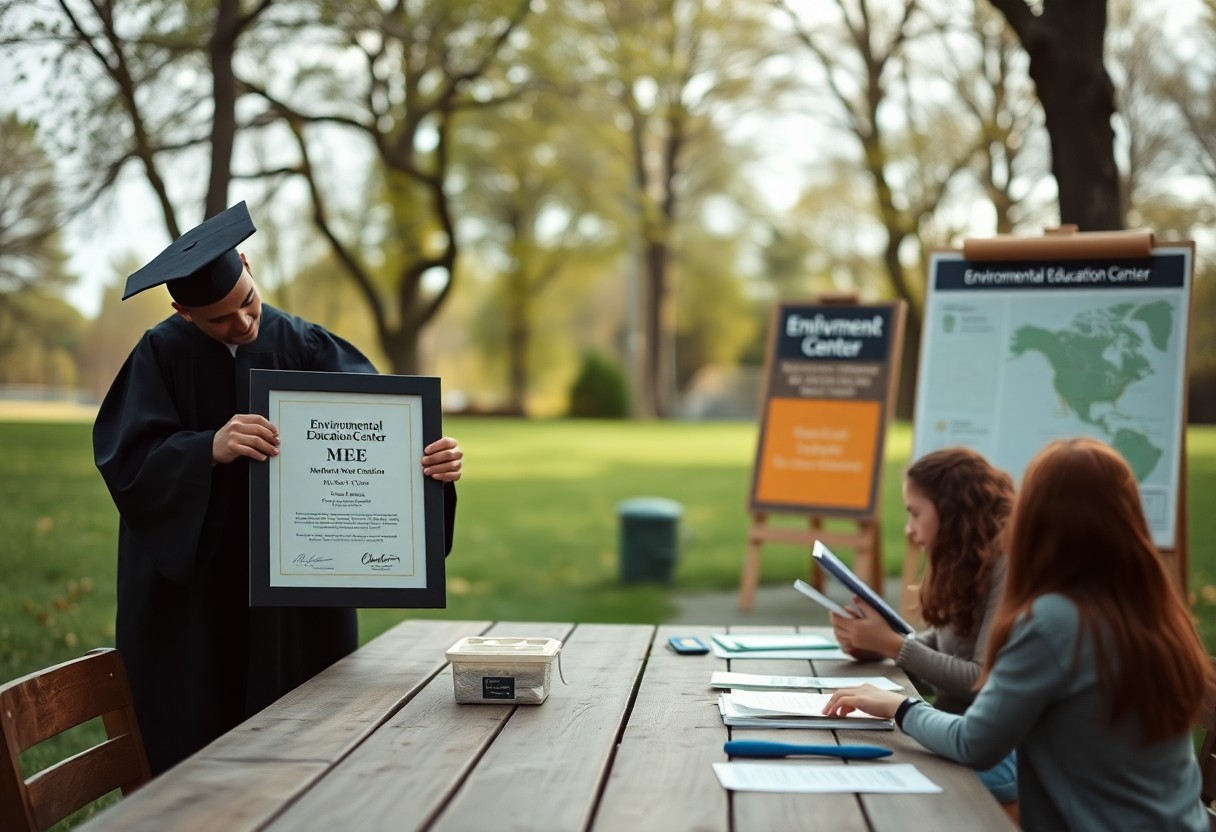
Education shapes how future leaders understand and teach environmental stewardship. A Master of Environmental Education (MEE) equips you with the knowledge and skills to design impactful learning experiences that connect people to nature. You gain expertise in curriculum development, sustainability practices, and community engagement, preparing you to inspire change across schools, nonprofits, and environmental organizations.
Key Takeaways:
- The Master of Environmental Education (MEE) is a graduate program designed to prepare educators, conservationists, and community leaders to teach environmental science and sustainability concepts effectively.
- Curriculum often blends theory and practice, including coursework in ecology, environmental policy, teaching methods, and experiential learning strategies.
- Many MEE programs emphasize hands-on fieldwork, outdoor instruction, and community-based projects to connect learning with real-world environmental challenges.
- Graduates pursue careers in nature centers, schools, non-profits, parks, and environmental organizations, often working to increase public awareness and stewardship of natural resources.
- Some programs offer flexible formats, such as part-time, online, or summer-intensive options, to accommodate working professionals and educators.
The Essential Curriculum of the Forest
Learning unfolds beneath the canopy, where sunlight filters through leaves and every sound carries meaning. You are immersed in a living classroom where observation becomes a daily practice and stillness reveals patterns invisible elsewhere. This is where theory meets soil, and understanding grows from direct experience.
Ecological Foundations
Roots anchor deep in the study of interdependence, nutrient cycles, and species relationships. You analyze forest ecosystems not as isolated units but as dynamic networks shaped by climate, disturbance, and time. This knowledge forms the scientific bedrock of your environmental practice.
Pedagogy of the Earth
Teaching emerges from the land itself, shaped by seasonal rhythms and natural phenomena. You design lessons that unfold outdoors, using place-based inquiry to connect learners to their surroundings through direct sensory engagement and reflective questioning.
Place shapes how students understand environmental concepts, and your role is to make those connections tangible. You guide learners through experiential activities that build ecological literacy-tracking animal signs, mapping watersheds, or journaling seasonal changes. These methods ground abstract ideas in real-world observation, fostering deeper, lasting understanding through consistent, mindful interaction with the natural world.
Tools for a Deliberate Career
You shape your path with intention, not chance. Every decision, from workshop design to community outreach, becomes a deliberate act of purpose. Skills in ecological literacy and experiential learning form the foundation, but it’s your consistent choices that define impact. This isn’t accidental influence-it’s a career built with clarity and care.
Leadership in Enduring Stewardship
Leadership means showing up long after the spotlight fades. You model behaviors that outlast programs and outlive grants. When others see your quiet consistency with local ecosystems, they begin to mirror it. True stewardship isn’t loud-it’s sustained.
The Art of Natural Persuasion
People follow not because you demand it, but because you’ve shown them something real. Your calm presence in nature, the way you listen to a stream or study a leaf, invites others in. Influence grows from authenticity, not argument.
When you speak from deep observation rather than rhetoric, your words carry weight. You don’t convince through force, but through shared experience-leading a group to notice bird calls at dawn or the texture of moss on stone. This subtle guidance shifts perspectives without confrontation, making environmental care feel personal and natural.
The Practice of Wild Research
You step beyond the classroom when you engage in wild research, allowing the environment itself to become your primary text. Observation, intuition, and presence shape your understanding, transforming abstract concepts into lived experience. This practice invites you to learn not just about nature, but from it.
Field Methodology
You record patterns in bird calls at dawn, track soil moisture across microclimates, and map plant succession after disturbances. Each technique grounds your inquiry in empirical data while honoring the unpredictability of natural systems. Your fieldwork blends precision with adaptability, ensuring authenticity in every finding.
Environmental Philosophy
You confront the ethics of human-nature relationships, questioning assumptions about ownership, value, and belonging. This reflection shapes how you interpret ecological data and design educational experiences. Your philosophy informs not only what you study, but how you teach it.
Philosophy in this context isn’t abstract-it guides your daily choices in the field and classroom. You consider Indigenous worldviews, deep ecology, and biocentric ethics not as theories, but as frameworks for action. Your role becomes one of translation: helping others see the moral dimensions of environmental stewardship through lived inquiry.
The Economy of Academic Stewardship
You balance long-term educational impact against immediate financial and personal costs when pursuing the Master of Environmental Education (MEE). This degree shapes not just your career path but also how you contribute to sustainability in academic and community settings.
Financial Investment
Tuition, materials, and potential relocation shape the monetary demands of the MEE. You assess funding options like scholarships, assistantships, or employer support to manage expenses without compromising quality.
Time Commitment
Your schedule must accommodate coursework, fieldwork, and independent study, often over one to two years. Balancing professional and personal responsibilities requires careful planning and consistent effort.
Completing the MEE often means reorganizing your daily routine. You may attend evening classes, complete weekend field sessions, or dedicate summers to intensive projects. This time investment builds expertise through sustained engagement with ecological concepts, teaching strategies, and community outreach-elements that define effective environmental educators. Your ability to manage these demands directly influences both academic success and post-graduation opportunities.
Entering the Scholar’s Grove
Begin your journey into transformative environmental education through IslandWood’s Graduate Program in Environmental Education & Equity, where immersive learning meets equity-centered practice in a dynamic outdoor setting.
Admission Criteria
You must hold a bachelor’s degree from an accredited institution and demonstrate a commitment to equity in education. Relevant experience in teaching, environmental work, or community engagement strengthens your application.
Statement of Purpose
Your statement of purpose reveals your motivations for joining the program. It should reflect your personal connection to environmental justice and your vision for contributing to inclusive educational spaces.
Share a story that shaped your path-perhaps a moment in nature that shifted your perspective or an experience exposing inequities in access to the outdoors. This narrative grounds your intent and shows how you’ll grow within the program’s collaborative environment.
Conclusion
With these considerations, the Master of Environmental Education equips you with the knowledge and practical skills to design impactful educational programs. You gain a deep understanding of ecological systems and effective teaching strategies, positioning you to inspire sustainable thinking in diverse audiences. Your role becomes central in shaping environmental awareness and action.