
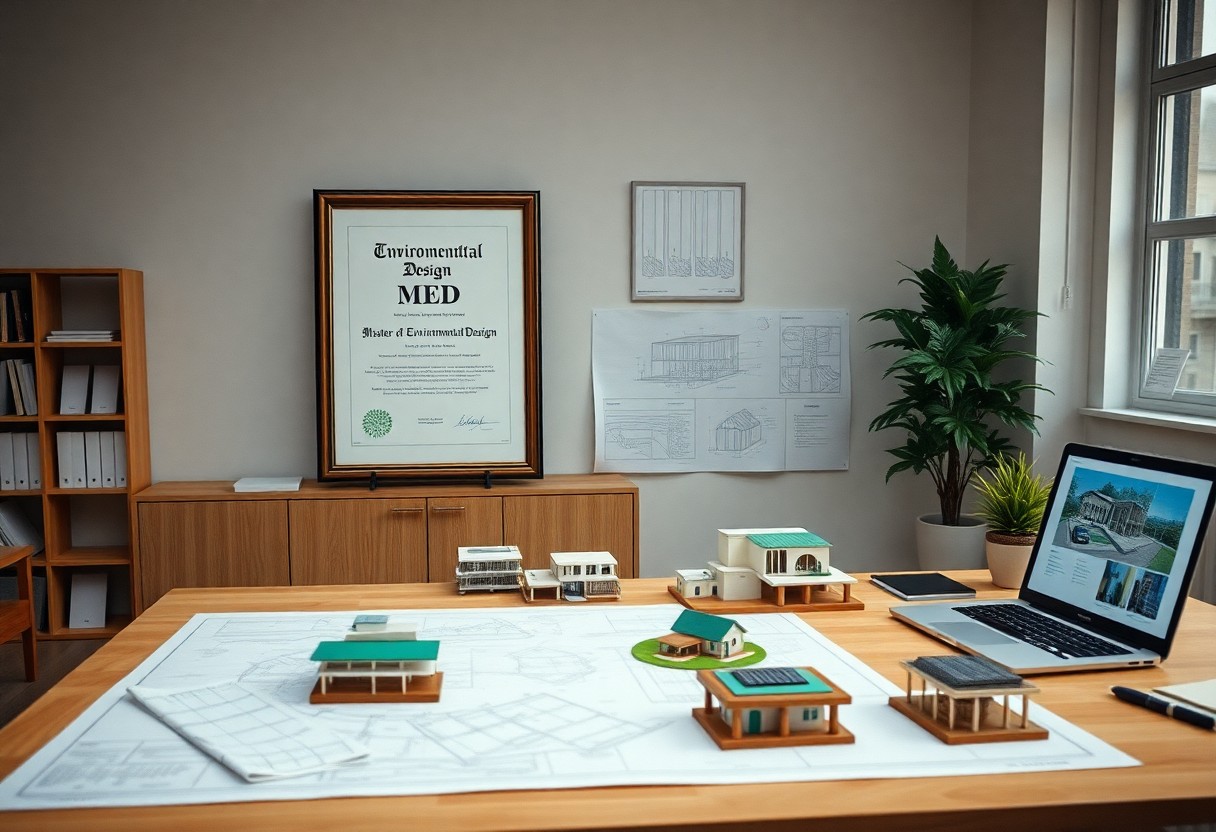
There’s a growing demand for professionals who shape sustainable, human-centered spaces, and the Master of Environmental Design (MED) equips you with the advanced knowledge to meet it. You engage in interdisciplinary research, exploring how design influences environments, behavior, and policy, positioning you as a thoughtful leader in shaping the built world.
Key Takeaways:
- The Master of Environmental Design (MED) is an interdisciplinary graduate degree focusing on the relationship between people and the built environment, integrating architecture, urban planning, and environmental psychology.
- Programs often emphasize research and critical thinking over technical design, making the MED ideal for students interested in theory, policy, or academic careers rather than professional licensure.
- Students tailor their studies through independent research, thesis projects, or directed coursework, allowing deep exploration of topics like sustainability, climate resilience, or social equity in design.
- The MED differs from professional degrees like the M.Arch or M.U.D. by not being accredited for architectural practice, appealing instead to those seeking to influence design from a scholarly or advocacy perspective.
- Graduates pursue diverse paths, including roles in research institutions, government agencies, nonprofit organizations, or continue to doctoral studies in environmental design or related fields.
The Philosophy of Habitation
You shape space through daily rituals, not just architecture. Every room you occupy reflects choices about comfort, connection, and belonging. This philosophy asks you to see dwelling as an act of intention-how light enters, how walls guide movement, how materials age. Your environment isn’t passive; it responds to the way you live, breathes with your routines, and shapes your sense of self over time.
The Curriculum of the Wild
You step into forests, wetlands, and urban edges as your classroom, learning through direct engagement with living systems. Each module challenges you to observe, respond, and design with ecological processes, not against them. Field journals replace traditional exams, and your projects grow from the patterns you witness in nature. This is environmental design shaped by wind, water, and time.
Professional Pathways
You open doors to diverse careers in sustainable design, urban planning, and environmental consulting with a Master of Environmental Design. Your expertise positions you to shape resilient built environments through innovative solutions. Explore top-ranked programs at Environmental Architecture and Design Graduate … to find the right fit for your goals.
Technological Symbiosis
You interact daily with systems that quietly shape environmental outcomes. Smart sensors adjust lighting and airflow in real time, reducing waste without sacrificing comfort. Design intelligence now learns from user behavior, adapting spaces to support sustainability by default. Technology no longer serves as a tool-it becomes a partner in shaping responsive, living environments.
The Research Thesis
Your research thesis becomes the centerpiece of your MED journey, reflecting your ability to investigate complex environmental challenges. You define a focused question, apply rigorous methods, and produce original insights that contribute to design knowledge. This independent project demonstrates your capacity to connect theory, practice, and critical thinking in a cohesive, scholarly format.
Global Perspectives
Your studies broaden beyond local contexts, exposing you to environmental challenges shaped by diverse climates, economies, and cultures. You analyze how urban planning in Scandinavia prioritizes sustainability, while adapting strategies in Southeast Asia responds to rapid urbanization and rising sea levels. This global lens sharpens your ability to design solutions that are context-sensitive and ethically grounded.
To wrap up
So you pursue the Master of Environmental Design to deepen your understanding of sustainable practices and spatial innovation. This degree equips you with advanced skills to shape built environments that respond to ecological and social challenges, positioning you as a thoughtful leader in design-driven change.