
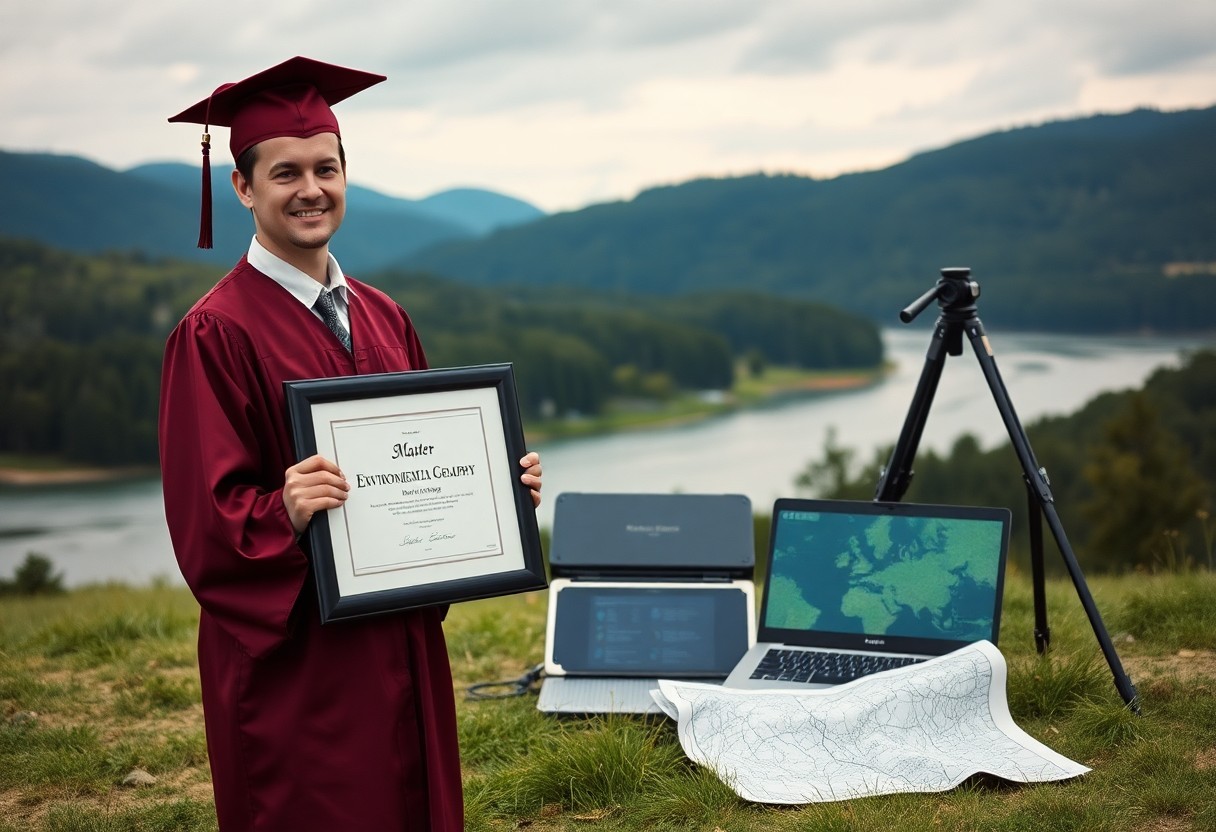
With environmental challenges shaping global policy and sustainability efforts, you gain advanced expertise through the Master of Environmental Geography (M.Env.Geog.). This program equips you with analytical tools and scientific knowledge to assess environmental systems, interpret spatial data, and contribute to evidence-based solutions in diverse ecological and urban contexts.
Key Takeaways:
- The Master of Environmental Geography (M.Env.Geog.) is a specialized graduate program focusing on the interaction between human societies and natural environments, combining geographic methods with environmental science.
- Students gain hands-on experience through fieldwork, spatial analysis, and the use of geographic information systems (GIS) to study issues like climate change, land use, and environmental policy.
- The program often includes interdisciplinary coursework, drawing from ecology, urban planning, and social sciences to provide a well-rounded understanding of environmental challenges.
- Graduates are prepared for careers in environmental consulting, government agencies, non-profits, or further academic research, depending on their focus and interests.
- Many programs offer thesis and non-thesis tracks, allowing students to choose between research-intensive study or a more applied, project-based approach.
The Terrestrial Symphony
You hear the earth speak through patterns in soil, slope, and vegetation. Each hillside, valley, and plain contributes a distinct note to a larger environmental composition. Your training sharpens your ability to interpret these signals, linking landforms to ecological processes. This awareness transforms how you read the world beneath your feet.
Master of Environmental Geography (M.Env.Geog.)
The Human Dwelling
You shape the environment around you with every structure you build and every resource you consume. Homes are not just shelters-they reflect cultural values, economic systems, and ecological footprints. How you design settlements influences biodiversity, energy use, and resilience to climate shifts. Your choices in urban planning, materials, and land use directly affect both local ecosystems and global sustainability goals.
Instruments of Observation
You rely on advanced tools to capture environmental changes with precision. Remote sensing devices, GPS mapping systems, and geographic information software form the core of modern geographic analysis. These technologies allow you to monitor ecosystems, track land use shifts, and model climate impacts effectively. Pursuing an MS in Geography & Environment sharpens your ability to apply these instruments in real-world contexts.
The Vocation of the Steward
You inherit a responsibility when you choose environmental geography-not just to study the Earth, but to protect its balance. Your maps, analyses, and fieldwork become tools for ethical action. Every decision you make in research or policy shapes how communities interact with their surroundings. Stewardship means seeing yourself as part of the ecosystem, not above it. You are called to act with foresight, humility, and care.
The Scholarly Pilgrimage
Your Journey Through Knowledge
You begin each day not with routine, but with inquiry-questions shaping your path through complex environmental systems. Data becomes narrative, maps reveal stories, and every research decision carries weight. This is not passive learning; you actively reconstruct understanding, confronting real-world challenges with academic rigor. The program molds your curiosity into precision, turning observation into insight.
Summing up
Now you hold a Master of Environmental Geography, a program that equips you with advanced analytical tools to assess environmental systems and human impacts. You have developed expertise in spatial analysis, sustainability planning, and environmental policy, preparing you to address real-world challenges with precision and confidence.