
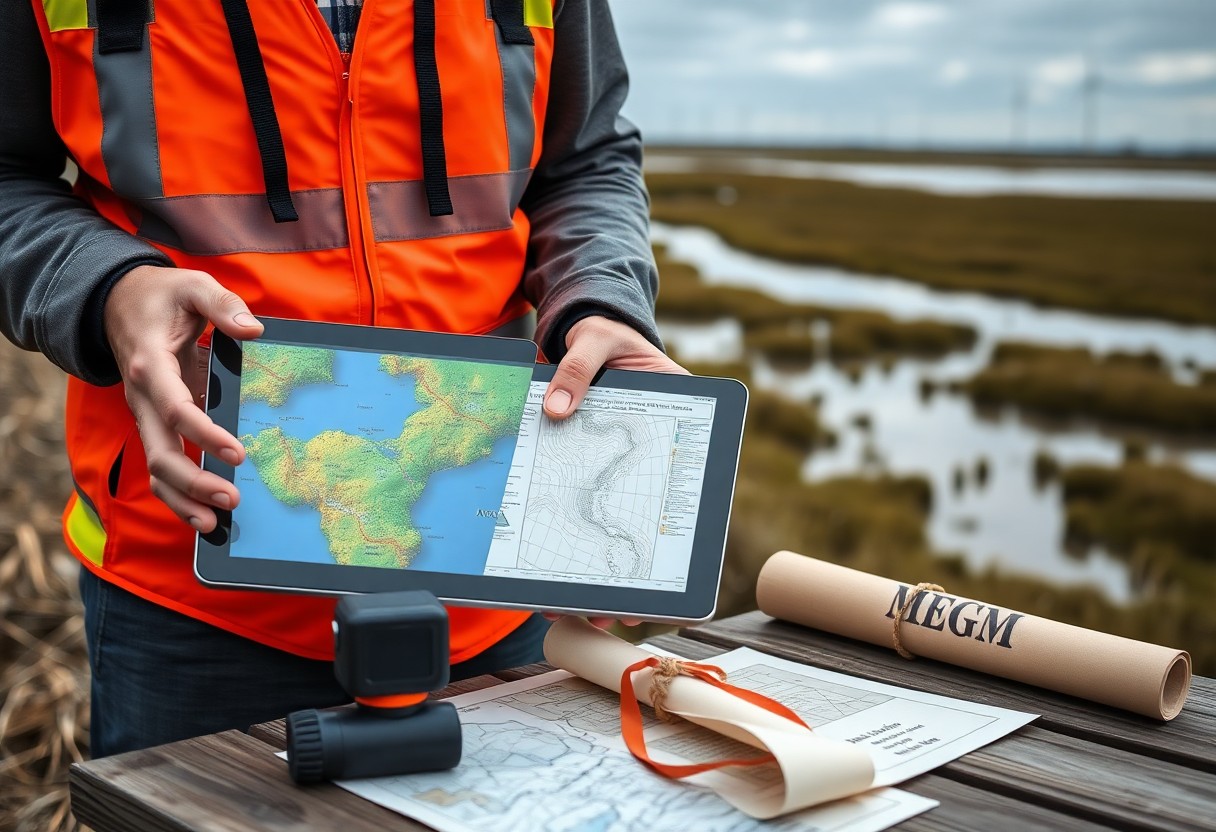
It’s a structured postgraduate program designed to deepen your understanding of environmental systems and human impacts on landscapes. You gain analytical tools to assess environmental change, manage natural resources, and contribute to sustainable development through research and policy applications.
Key Takeaways:
- The Master of Environmental Geography and Management (MEGM) integrates geographic analysis with environmental policy to address real-world challenges like climate change, land use, and sustainability.
- Students gain hands-on experience with geospatial technologies such as GIS, remote sensing, and data modeling to analyze environmental patterns and support decision-making.
- The program emphasizes interdisciplinary learning, combining natural sciences, social sciences, and policy studies to understand human-environment interactions.
- Graduates are prepared for careers in environmental planning, conservation, government agencies, NGOs, and research institutions.
- Many MEGM programs include fieldwork, internships, or capstone projects that connect academic training with practical environmental management solutions.
The Living Canvas: Geographic Foundations
Earth’s surface is a dynamic interplay of natural forces and human actions. You observe how landforms, climate, and ecosystems shape life across regions. This foundation helps you interpret environmental change and plan sustainable interventions grounded in spatial understanding.
Physical Systems of our Fragile Planet
Energy flows and material cycles drive Earth’s atmosphere, hydrosphere, and lithosphere. You study how tectonic activity, weather patterns, and water systems interact to create the conditions for life-and the vulnerabilities behind natural hazards and climate shifts.
Patterns of Human Settlement and Influence
Population distribution reflects access to resources, climate suitability, and historical development paths. You analyze how cities emerge, expand, or decline based on geography, infrastructure, and policy decisions that reshape the land.
Where people choose to live reveals deeper relationships between environment and economy. You see how agricultural practices, urban sprawl, and transportation networks alter ecosystems, often amplifying risks like flooding or heat stress. Recognizing these patterns allows you to anticipate impacts and guide development toward balance rather than degradation.
The Art of Stewardship: Management Principles
Stewardship begins with your responsibility to balance human needs with ecological limits. You apply structured decision-making to protect natural systems while supporting community well-being. Insights from peers in related fields, like those shared in Getting My Master’s Degree in Geomatics for …, highlight how technical training strengthens real-world environmental management.
Legislative Protections for the Wilderness
Legal frameworks define what you can and cannot do in designated wild areas. These laws restrict development, logging, and extraction to preserve biodiversity and ecosystem integrity. Your role includes understanding statutes like the Wilderness Act and ensuring compliance in land-use planning and conservation initiatives.
Sustainable Utilization of Vital Resources
Resource use must meet present demands without compromising future availability. You manage water, forests, and soils using data-driven strategies that prevent depletion. Balancing extraction with regeneration ensures ecosystems remain functional and productive over time.
Sustainable utilization requires you to monitor resource health through field assessments and geospatial tools. You set harvest limits, rotate land use, and restore degraded areas to maintain productivity. This proactive approach supports both ecological resilience and long-term community needs, turning conservation into a measurable, ongoing practice.
Sentinels of the Sky: Geotechnological Tools
Modern environmental challenges demand precision and foresight. You rely on geotechnological tools to transform raw spatial data into actionable insights, guiding sustainable management decisions across dynamic landscapes.
Advanced Mapping and Spatial Analysis
High-resolution GIS platforms place powerful analytical capabilities in your hands. You map ecological gradients, model land-use scenarios, and identify environmental risks with accuracy that supports informed policy and planning.
- Utilize real-time GPS data for precise field validation
- Apply spatial statistics to detect environmental patterns
- Integrate multi-source datasets into unified geovisualizations
| Tool | Application |
| QGIS & ArcGIS Pro | Land cover classification and suitability modeling |
| Google Earth Engine | Large-scale environmental change detection |
| Drones (UAVs) | High-resolution terrain and vegetation mapping |
Monitoring Change through Remote Sensing
Satellite imagery gives you a continuous view of environmental shifts over time. You detect deforestation, track urban expansion, and assess ecosystem health using spectral bands and time-series analysis.
Remote sensing allows you to observe processes that are invisible at ground level. By analyzing changes in vegetation indices like NDVI or surface temperature trends, you identify early signs of degradation, assess the impact of climate variability, and validate conservation outcomes across vast or inaccessible regions.
Facing the Great Challenge: Climate Action
You are on the front line of climate action, where decisions shape ecosystems for generations. This program equips you with tools to analyze environmental change, design effective policies, and lead sustainable interventions in real-world settings.
Mitigation of Ecological Disruptions
Every intervention you design reduces pressure on fragile systems. You learn to assess carbon flows, restore degraded lands, and implement land-use strategies that halt biodiversity loss while supporting community needs.
Building Resilience in Vulnerable Biomes
Your work strengthens ecosystems most at risk from climate extremes. You apply geospatial analysis and ecological modeling to protect wetlands, forests, and coastal zones from irreversible damage.
Through targeted monitoring and adaptive management, you develop site-specific strategies that enhance natural recovery processes in biomes like mangroves, alpine regions, and arid lands. You engage local knowledge, integrate climate projections, and deploy early warning systems that reduce exposure to droughts, floods, and habitat fragmentation-ensuring ecosystems and communities adapt in tandem.
The Guardian’s Career: Professional Horizons
You stand at the threshold of meaningful impact, equipped with the MEGM’s interdisciplinary training. Environmental challenges demand informed, agile professionals, and your expertise positions you to meet that call across sectors, shaping policy, guiding communities, and influencing long-term sustainability strategies with confidence and clarity.
Leadership in Environmental Governance
Your role in public institutions or international bodies will center on decision-making that balances ecological integrity with societal needs. You shape regulations, oversee natural resource frameworks, and ensure compliance with environmental standards, driving systemic change from within established governance structures.
Strategic Consulting for a Greener Future
Your insight becomes a catalyst for transformation in private and nonprofit sectors. Firms rely on your analysis to align operations with sustainability goals, reduce environmental risk, and meet evolving regulatory expectations through practical, forward-thinking solutions.
Organizations turn to consultants like you to decode complex environmental data and translate it into actionable business strategies. You assess supply chain impacts, recommend low-carbon transitions, and help clients meet ESG benchmarks, combining technical knowledge with real-world applicability to deliver measurable environmental and economic returns.
To wrap up
Summing up, you gain advanced expertise in environmental systems, spatial analysis, and sustainable management through the Master of Environmental Geography and Management. This program equips you with practical research skills and policy insights to address real-world environmental challenges. Your training prepares you for leadership roles in government, NGOs, or environmental consulting, where your work directly influences informed decision-making and long-term environmental planning.