
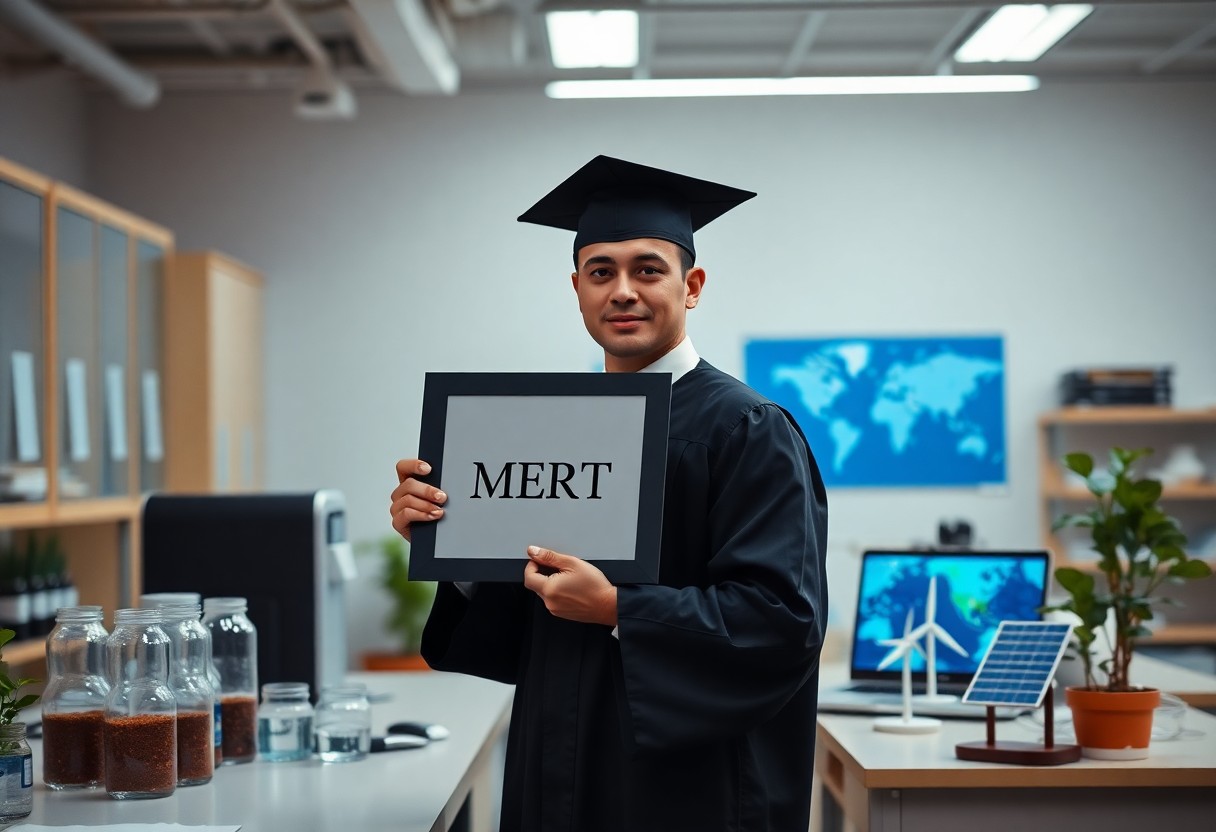
Resource challenges shape the future of our planet, and you need advanced tools to address them. The Master of Environment and Resource Technology (MERT) equips you with scientific expertise and technical skills to manage natural systems sustainably. You analyze real-world environmental issues, apply innovative technologies, and develop practical solutions for a resilient world.
Key Takeaways:
- The Master of Environment and Resource Technology (MERT) is a graduate program focused on applying scientific and technical knowledge to real-world environmental challenges.
- Students gain hands-on experience with tools and methods for managing natural resources, monitoring pollution, and assessing environmental impacts.
- The curriculum combines environmental science with practical technology use, preparing graduates for careers in sustainability, conservation, and environmental consulting.
- Programs often include fieldwork, lab analysis, and collaboration with government or industry partners to solve local and global environmental issues.
- Graduates are equipped to work in diverse sectors, including environmental protection agencies, research institutions, and private firms focused on resource management.
The Hard Science of the Earth
You engage directly with the physical systems that shape our planet, using precise measurements and reproducible methods to understand environmental change. This program grounds you in the empirical rigor required to address complex resource challenges through science-driven solutions.
Technical Foundations
Your training begins with core principles in geospatial analysis, environmental chemistry, and data modeling. These tools allow you to interpret complex datasets and build accurate representations of environmental conditions over time.
Natural Systems
Earth’s ecosystems function through interconnected cycles of energy and matter. You study how water, carbon, and nutrients move through landscapes, shaping the behavior of forests, rivers, and soils in measurable ways.
Observing natural systems means tracking real-world processes like sediment transport, groundwater recharge, and plant succession. You learn to quantify these dynamics using field instruments and remote sensing, gaining insights that inform sustainable management and restoration efforts grounded in observable phenomena.
Measuring the Wild Places
You step into remote ecosystems with precision tools in hand, collecting data that reveals the health of untouched environments. Every measurement-from soil composition to water pH-adds clarity to conservation decisions. Fieldwork becomes your laboratory, where real-time analysis shapes sustainable outcomes.
Resource Management
You balance human needs with ecological limits by applying science-based strategies to protect natural assets. Monitoring usage patterns helps you identify inefficiencies and prevent overexploitation. Your decisions ensure resources remain viable for future generations.
Digital Mapping
You visualize complex environmental data through interactive maps that guide conservation planning. Spatial analysis allows you to track changes in land use, habitat loss, or water flow with accuracy. These tools turn raw data into actionable insights.
Digital mapping transforms how you interpret environmental systems by layering satellite imagery, field observations, and predictive models into dynamic geospatial platforms. You use GIS software to monitor deforestation trends, assess flood risks, or plan reforestation corridors. These maps are not static-they update in real time, giving you a responsive tool to manage ecosystems with greater foresight and coordination across regions.
The Power of New Energy
Explore how innovation is reshaping energy systems through the Environmental and Resource Management, M.Sc. program, where sustainability meets real-world application in modern energy strategies.
Energy Solutions
Design efficient systems that reduce emissions and improve access to clean power. You’ll analyze renewable technologies and integrate them into scalable models that respond to regional energy demands.
Waste Recovery
Turn discarded materials into valuable resources by mastering advanced recovery techniques. You’ll learn to optimize processes that minimize landfill use and support circular economies.
Waste recovery goes beyond recycling-it involves transforming organic, industrial, and municipal waste into energy, raw materials, or reusable products. You gain hands-on experience with thermal, biological, and chemical conversion methods, preparing you to lead projects that close resource loops and reduce environmental impact.
Working in the Field
You step beyond the classroom when you enter real-world environmental challenges. Fieldwork becomes a regular part of your routine, whether assessing water quality in remote catchments or analyzing soil composition in degraded ecosystems. This hands-on experience sharpens your technical skills and deepens your understanding of environmental systems in action.
Industry Roles
You find opportunities across environmental consultancies, government agencies, and private sector firms focused on sustainability. Your training equips you to manage waste systems, conduct environmental impact assessments, and support compliance with regulations. These roles connect your technical expertise with practical solutions for industry challenges.
Research Tracks
You can specialize in areas like pollution control, renewable resources, or ecosystem restoration through structured research pathways. These tracks integrate lab work, field data, and analytical modeling to address pressing environmental issues. Your project contributes directly to scientific knowledge and real-world applications.
Choosing a research track allows you to focus on a specific environmental challenge over several months, guided by experienced faculty. You design experiments, collect and interpret data, and present findings that may influence policy or technological approaches. This experience builds your credibility as a skilled practitioner and analytical thinker in environmental science.
The Duty of the Specialist
You carry a responsibility that extends beyond data and reports. Your expertise shapes decisions that affect ecosystems, communities, and policy. With specialized knowledge in environment and resource technology, you are expected to act with integrity, precision, and foresight in every project you lead or influence.
Stewardship Duties
Every choice you make impacts natural systems and human well-being. You are entrusted to manage resources efficiently, minimize environmental harm, and prioritize long-term sustainability over short-term gains. Your daily work reflects a commitment to ethical science and responsible innovation.
Future Legacy
Your actions today set the standard for environmental practice tomorrow. Future professionals will inherit the frameworks, technologies, and policies you help refine. You are not just solving current problems-you are shaping the conditions under which future generations will live and work.
Long after your projects conclude, the effects of your decisions will persist in restored habitats, cleaner air, and resilient infrastructure. You leave behind more than reports and models-you establish precedents. The tools you refine, the standards you uphold, and the ethics you demonstrate become part of a lasting environmental legacy shaped by your choices in the present.
Conclusion
Summing up, the Master of Environment and Resource Technology equips you with applied scientific knowledge and technical skills to address real-world environmental challenges. You gain hands-on experience in resource management, pollution control, and sustainable technologies, positioning you to lead in environmental sectors across industry, government, and research.