
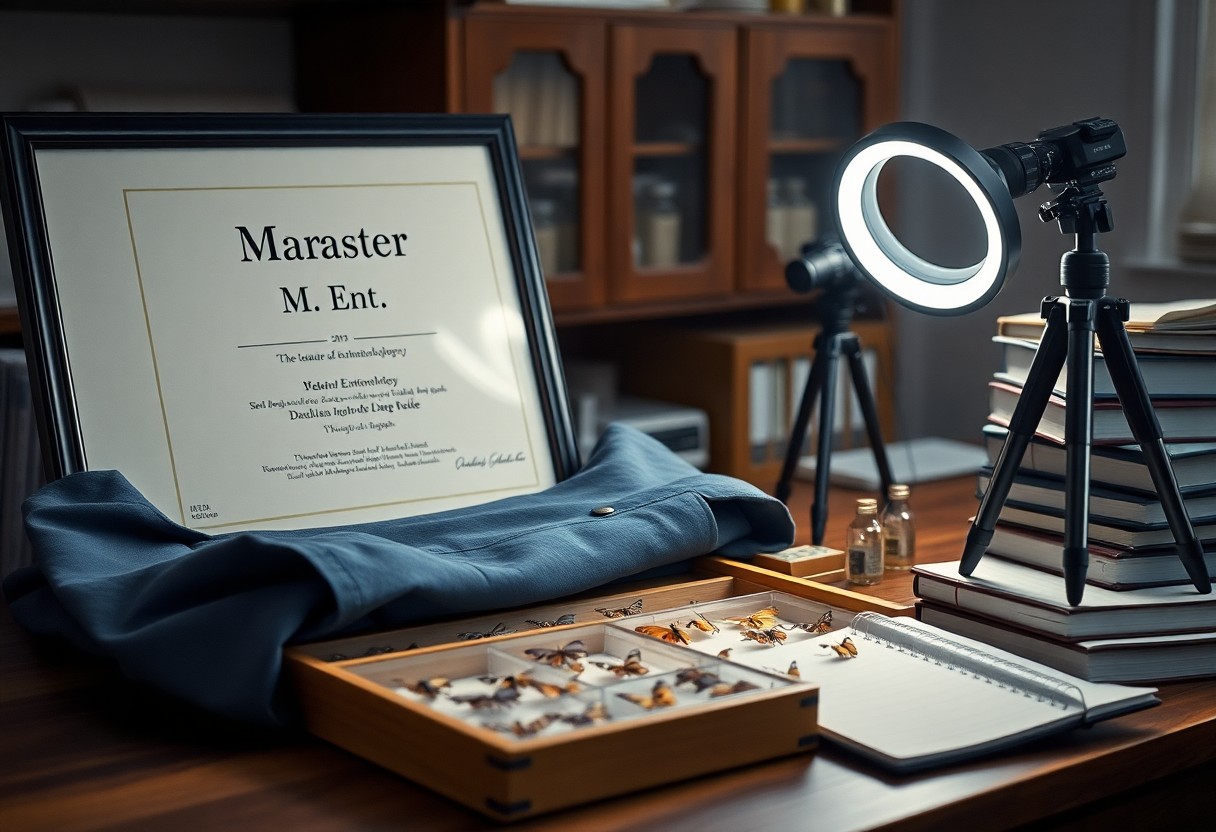
Entomology masters program trains you in insect biology, pest management, and research methods, preparing you for careers in academia, industry, or public health.

Key Takeaways:
- Master of Entomology (M.Ent.) is a postgraduate program focused on insect biology, taxonomy, physiology, ecology, pest management, and molecular methods, typically combining coursework with a research thesis or capstone project.
- Curriculum emphasizes hands-on laboratory and field techniques, statistical analysis, integrated pest management, taxonomy and systematics, and training in modern molecular and imaging tools.
- Career outcomes include academic research, agricultural and public-health pest control, environmental consulting, extension services, biotechnology, and forensic entomology.
Core Academic Foundations
Coursework grounds you in biological theory, statistical analysis, and experimental design that underpin advanced entomological research and applied field studies.
Insect Morphology and Physiology
Anatomy and physiology modules train you to identify structures, interpret functional adaptations, and apply microscopy and imaging techniques to insect systems.
Systematic Entomology and Evolution
Classification courses teach you phylogenetic methods, species delimitation, and molecular approaches to reconstruct evolutionary relationships among insects.
Phylogeny-focused study teaches you to combine morphological characters, genomic data, and computational models for rigorous species concepts, time-calibrated trees, and biogeographic inference; field sampling, museum curation, and databases provide material and context, while you learn to translate phylogenetic results into conservation priorities, pest origin tracing, and taxonomic revisions.
Specialized Areas of Study
Courses let you concentrate in taxonomy, ecology, pest management or public health, shaping career paths in research, industry or policy.
Medical and Veterinary Entomology
Vectors are studied so you can assess disease transmission, design control strategies, and advise public-health and veterinary programs on surveillance and outbreak response.
Urban and Structural Pest Management
Buildings-focused studies train you in integrated pest management for homes and facilities, emphasizing inspection, prevention and targeted interventions to protect health and infrastructure.
Practical training gives you hands-on experience in inspection, species identification, monitoring, exclusion, baiting and targeted pesticide application, while covering regulations and safety protocols; you learn to set action thresholds, craft site-specific IPM plans for residential and commercial properties, communicate risks to stakeholders, and implement long-term prevention to limit recurrence and liability.
Advanced Research Methodologies
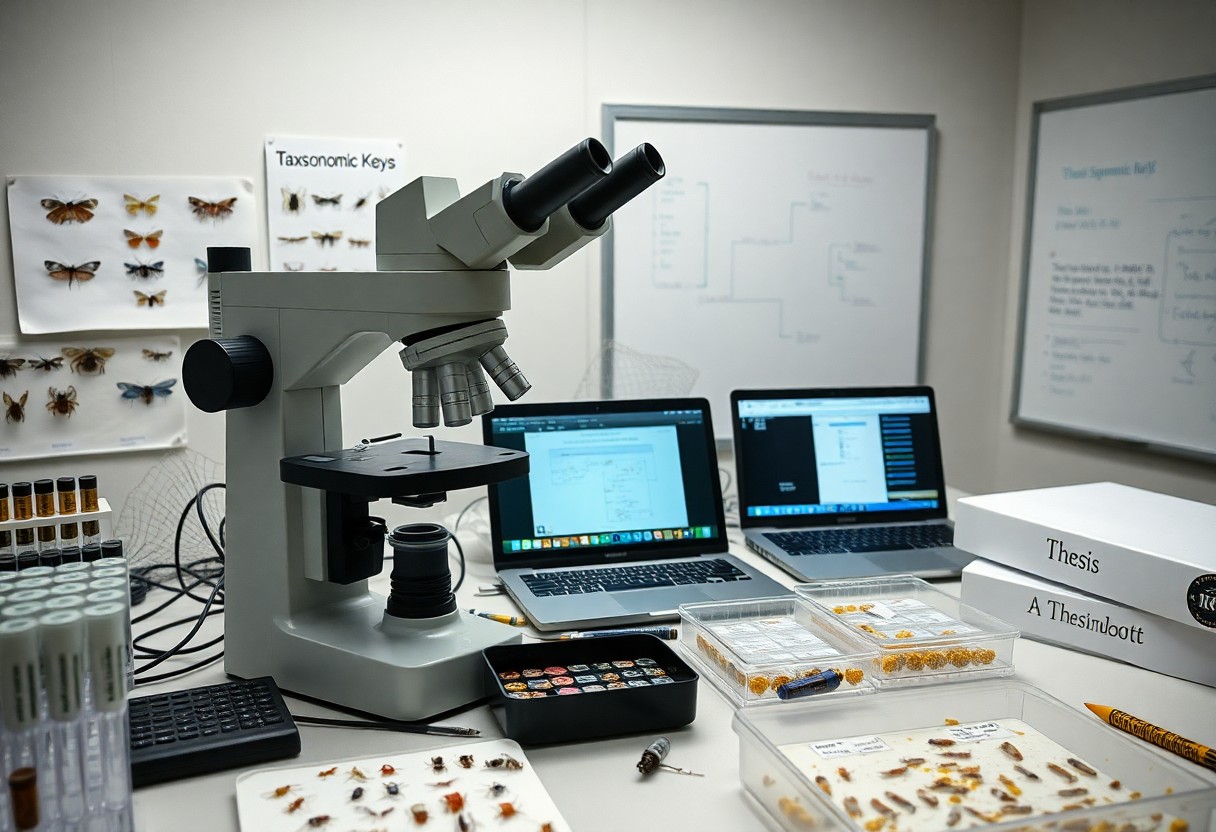
You refine experimental design, statistical techniques, and ethical sampling protocols to test ecological hypotheses and pest management strategies, integrating fieldwork, lab assays, and data modelling to produce publishable results and thesis-ready analyses.
- Field sampling and survey design
- Molecular assays and sequencing
- Bioinformatics pipelines
- Statistical modelling and inference
Method overview
| Technique | Purpose |
| Transects & traps | Quantify abundance and diversity |
| PCR & sequencing | Resolve taxonomy and genes |
| Metagenomics | Assess microbial and community profiles |
| Statistical models | Test hypotheses and predict trends |
Field Collection and Ecological Sampling
During field surveys you employ transects, pitfall traps, and sweep nets to quantify community structure and temporal patterns while adhering to permit and safety standards.
Molecular Techniques and Bioinformatics
Genomic assays enable you to resolve species boundaries, assess population genetics, and annotate functional genes using sequence pipelines and public databases.
Combining laboratory protocols with computational workflows, you implement PCR, high-throughput sequencing, and metagenomic approaches to examine genetic variation and microbial associations. Careful contamination control and detailed metadata collection underpin reproducibility. Workflows include quality filtering, assembly or OTU clustering, taxonomic assignment, and phylogenetic or population-genetic analyses using tools such as BLAST, BWA, and R packages. You prioritize read-depth targets, appropriate reference databases, and scripted pipelines (Snakemake, Nextflow) to produce transparent, reproducible results ready for thesis chapters and publication.
Applied Integrated Pest Management (IPM)
You integrate monitoring, cultural tactics, biologicals, and selective chemical controls to suppress pests while protecting beneficials and maintaining crop productivity.
Biological Control and Sustainability
Using predators, parasitoids, pathogens, and habitat manipulation lets you reduce pesticide use, enhance ecosystem services, and preserve long-term productivity.
Chemical Ecology and Toxicology
Chemical signals, semiochemicals, and toxicant profiles inform your strategies for baiting, repellents, resistance management, and minimizing non-target harm.
Understanding olfactory cues, pheromone blends, and host kairomones helps you design species-specific lures and mating disruption with minimal collateral damage. You evaluate dose-response curves, sublethal behavioral effects, and detoxification enzymes to anticipate resistance and optimize dosages. Risk assessments of persistence, drift, and non-target toxicity then guide timing, formulation choice, and integration with biological agents to protect ecosystem services.
Degree Tracks and Requirements
Degree tracks require you to complete core entomology coursework, electives, and research or practicum components; minimum credit and GPA standards apply, plus seminar participation and qualifying assessments tailored to your chosen specialization.
Thesis-Based Research Specialization
Thesis-based options require you to conduct original research, produce a defended thesis, and publish or present findings; faculty mentorship guides experimental design and data analysis throughout your program.
Professional Non-Thesis Practicum
Practicum placements place you in applied settings where you complete hands-on projects or internships that build technical skills, professional practice, and networks while meeting credit and supervisory requirements.
You will spend a semester or more in placements with vector control agencies, agricultural extension services, biotech companies, or museums; expect six to twelve credits, a faculty supervisor, employer mentor, and deliverables such as a technical report, practicum portfolio, and final presentation that document competencies and professional growth.
Conclusion
So you gain advanced knowledge of insect biology, research methods, and applied pest management, preparing you for careers in academia, industry, or public service while contributing to biodiversity and food security.
FAQ
Q: What does a Master of Entomology (M.Ent.) program typically include and how long does it take?
A: Master of Entomology (M.Ent.) programs usually run two years full-time, though part-time and accelerated options exist. Core coursework covers insect taxonomy and systematics, insect physiology and development, insect ecology, pest management and integrated pest management (IPM), insect pathology, and molecular entomology techniques. Programs commonly offer a thesis (research) track and a non-thesis (coursework and project) track; thesis tracks require an original research project, data analysis, and a written thesis, while non-thesis tracks emphasize advanced coursework, laboratory practica, and either a capstone project or internship. Fieldwork, insect collection and curation, laboratory training in microscopy and molecular methods, and statistics for biological research form important practical components. Typical credit requirements range from 30-40 credits depending on institution and track, and program milestones include coursework completion, comprehensive exams or proposal defenses, and final thesis submission or project evaluation.
Q: What are the usual admission requirements and application steps for an M.Ent. program?
A: Admission requirements often include a bachelor’s degree in biology, entomology, agriculture, ecology, or a closely related discipline with a competitive GPA; some programs accept applicants from other science backgrounds with prerequisite coursework in biology and chemistry. Required application materials typically consist of academic transcripts, a statement of purpose outlining research interests, two or three letters of recommendation, a CV, and sometimes a research proposal for thesis-track applicants. Standardized test scores (GRE) are optional or waived at many institutions, but international applicants may need to submit English proficiency scores (TOEFL or IELTS). Relevant field or lab experience, publications or conference presentations, and faculty alignment with proposed research strengthen applications. Application timelines usually align with academic intake periods (fall most common), and applicants should consult target programs for exact deadlines, funding/assistantship opportunities, and any required interviews with prospective advisors.
Q: What career paths and further study options are available after completing an M.Ent.?
A: Graduates enter a wide range of roles across agriculture, public health, environmental consulting, biological control and quarantine services, food safety, pest management industry, biotechnology firms, museums and natural history collections, and academia. Job titles include entomologist, integrated pest management specialist, research scientist, extension specialist, quarantine inspector, insect rearing manager, and regulatory scientist. A Master of Entomology also provides a pathway to Ph.D. programs for those pursuing research-intensive careers or university faculty positions; admission to doctoral programs typically requires a strong research record, letters from faculty, and a clear proposal or research agenda. Relevant technical skills that enhance employability include insect identification, experimental design, molecular techniques (PCR, sequencing), statistical analysis and ecological modeling, GIS for spatial studies, and experience with field sampling methods. Salary ranges vary by sector and region, with industry and government roles often offering higher starting compensation than entry-level academic positions; pursuing certification, specialized training, or a Ph.D. can expand leadership and research opportunities.