

There’s a rigorous master’s program that prepares you to design security architectures, manage cyber risk, and enforce compliance, equipping you to lead enterprise IT security strategy.
Key Takeaways:
- Program combines enterprise management and cybersecurity, covering governance, risk management, compliance, and threat protection.
- Curriculum emphasizes practical skills: secure architecture, incident response, penetration testing, and hands-on labs aligned with industry standards and certifications.
- Graduates qualify for leadership and specialist roles such as security manager, enterprise risk analyst, or CISO-track positions, prepared for compliance and strategic IT decision-making.
Core Principles of Enterprise Security Architecture
Architecture aligns security domains with business processes so you can define controls, data flows, trust boundaries, and governance that reflect risk appetite and support measurable compliance.
Integrating Security into Business Strategy
Alignment requires you to embed security requirements into project planning, budgets, and KPIs so investments reduce exposure while enabling business objectives.
Defense-in-Depth and Zero Trust Models
Layering controls and assuming no implicit trust makes you resilient: enforce microsegmentation, least privilege, continuous authentication, and monitoring across assets and services.
Implementing these models asks you to verify every identity and device, apply contextual access decisions, segment workloads, and centralize telemetry for real-time threat detection and automated response; prioritize policy orchestration and regular red-teaming to validate controls.
Advanced Network and Infrastructure Protection
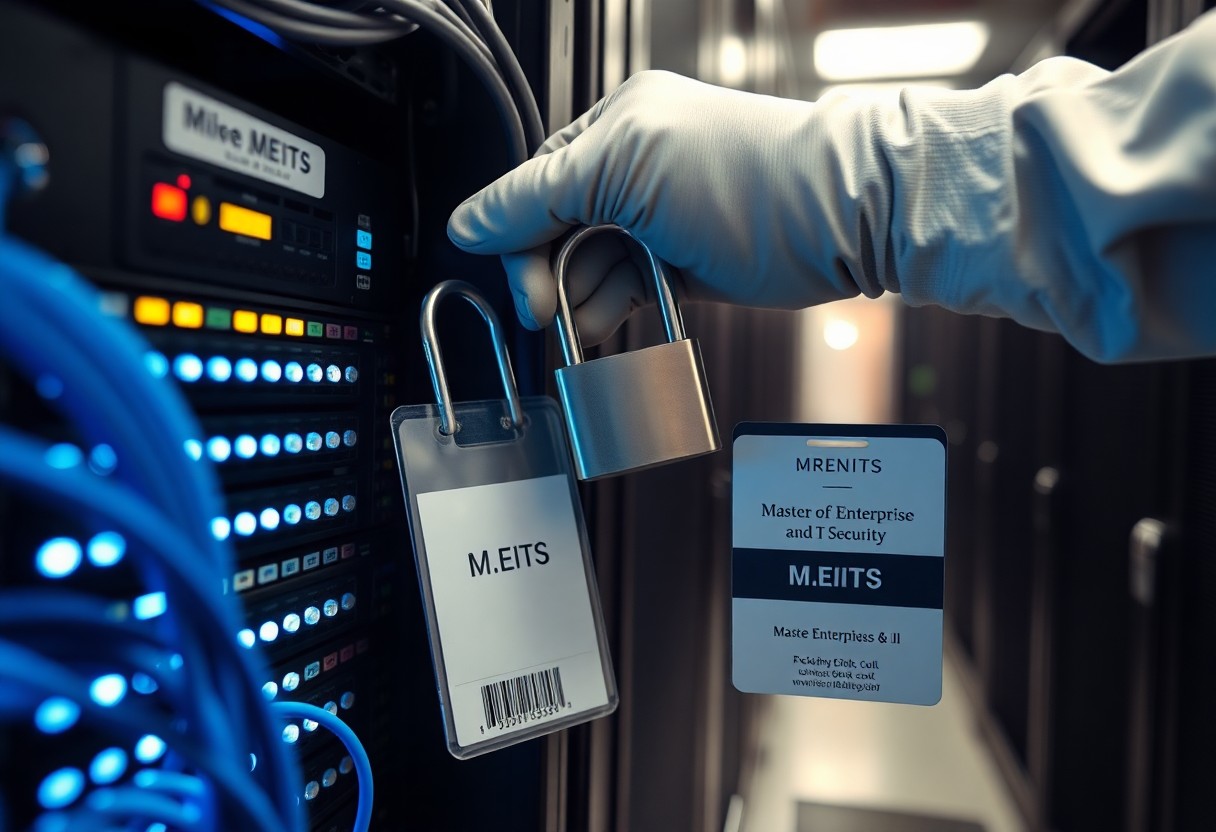
You implement layered defenses, microsegmentation, intrusion detection, and strict access controls to reduce attack surface and enforce policy across on-premises networks and edge devices.
- Implement segmentation and zoning to limit lateral movement.
- Enforce identity-first access with MFA and least privilege.
- Deploy continuous monitoring and automated response for rapid containment.
| Control | Purpose |
| Microsegmentation | Contains breaches and limits lateral movement |
| IDS/IPS | Detects anomalies and blocks threats |
| MFA & IAM | Prevents unauthorized access and enforces policy |
| Network encryption | Protects data in transit between sites and cloud |
Securing Cloud and Hybrid Environments
Cloud workloads require you to enforce strict identity management, encryption in transit and at rest, workload isolation, and continuous posture assessment to maintain compliance and reduce exposure.
Resilience in Critical Information Infrastructure
Design redundancy, real-time monitoring, incident playbooks, and cross-domain drills so you sustain operations under attack and restore services with defined recovery objectives.
During testing, you should validate failover chains, backup integrity, interdependency mapping, and coordinated recovery across sectors to meet service-level targets. Clear communication protocols and prioritized restoration lists help you reduce downtime and guide resource allocation during multi-vector incidents.
Governance, Risk Management, and Compliance (GRC)
GRC aligns your governance, risk management, and compliance with organizational goals, turning policy into actionable controls, clear responsibilities, and measurable audit trails across IT and business processes.
International Standards and Regulatory Frameworks
Standards such as ISO 27001, NIST, and GDPR provide frameworks you use to design controls, measure compliance, and prepare for audits across jurisdictions.
Quantitative Risk Assessment Methodologies
Quantitative methods let you assign numeric likelihoods and impacts, calculate expected loss, and prioritize investments using metrics such as annualized loss expectancy (ALE).
You can build probabilistic models using Monte Carlo simulations, threat frequency distributions, and loss severity curves to estimate exposure. Combining asset valuations, control-effectiveness scores, and scenario assumptions enables you to translate qualitative judgments into cost‑benefit analyses that support data‑driven mitigation decisions.
Cyber Threat Intelligence and Incident Response
You analyze threat intelligence feeds and coordinate incident response playbooks to reduce dwell time, prioritize alerts, and guide remediation across teams.
Proactive Threat Hunting and Analysis
Hunting for indicators and anomalies helps you find hidden intrusions, refine detection rules, and reduce false positives through continuous hypothesis-driven exercises.
Business Continuity and Disaster Recovery Planning
Planning ensures you can restore operations quickly, prioritize critical assets, and coordinate stakeholders during outages using tested runbooks and defined RTOs and RPOs.
Develop detailed recovery procedures, map interdependencies, and assign clear roles so you shorten downtime and meet compliance obligations. Run scheduled tabletop exercises and full failover tests to validate assumptions, uncover gaps, and update communication plans for executives and customers.
Security of Emerging Technologies
Security of emerging technologies requires continuous risk assessment as you integrate novel systems; you should adopt threat modeling, policy updates, and cross-disciplinary audits to keep business processes compliant and resilient against evolving attacks.
Securing Artificial Intelligence and Machine Learning
You must enforce model governance, secure data pipelines, and test models for adversarial risks while maintaining explainability and access controls to prevent misuse and data leakage.
Vulnerability Management in IoT and Edge Computing
Devices at the edge create exposed attack surfaces, so you must maintain device inventories, enforce timely patching, and segment networks to reduce blast radius and detect anomalies fast.
Inventory and firmware tracking give you visibility to prioritize high-risk nodes using CVSS scores, automated update orchestration, and behavioral monitoring tied to incident response playbooks.
Strategic Leadership and Human Factors
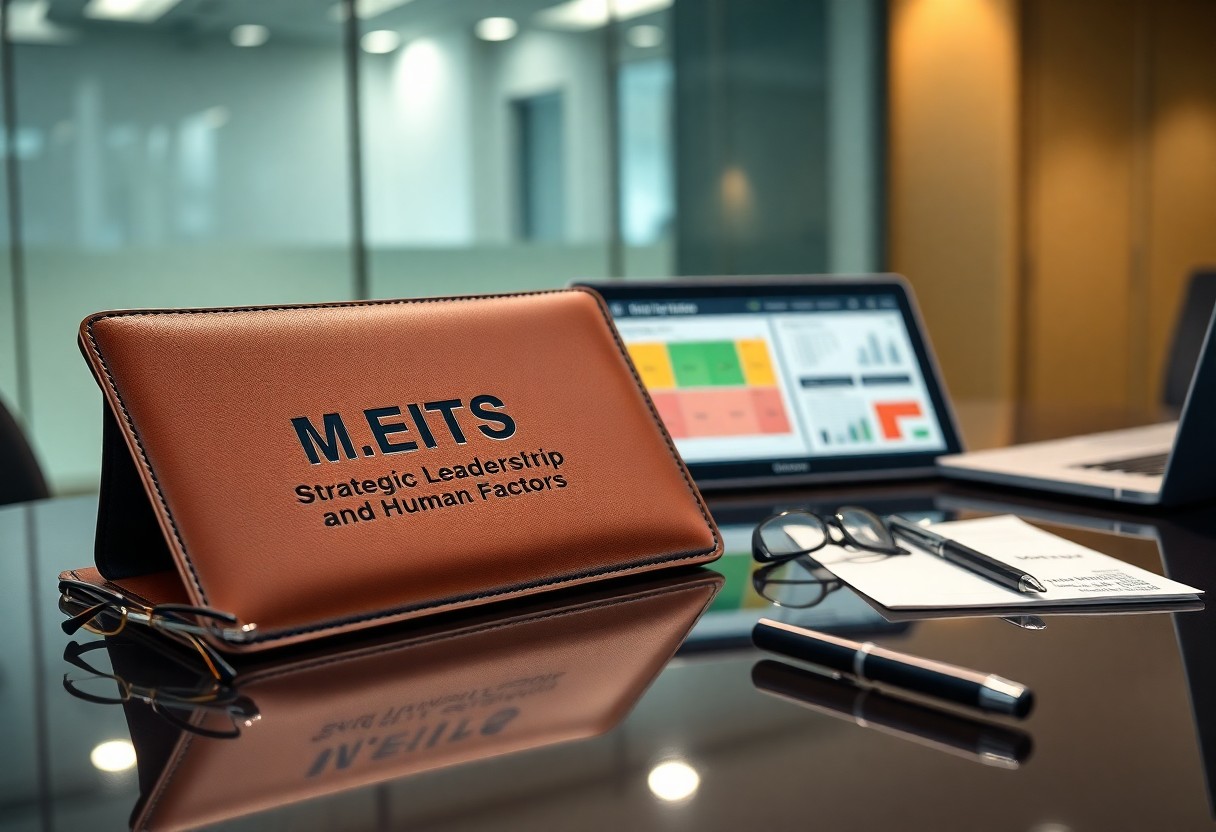
You translate strategy into people-centered security programs, aligning incentives, training, and governance while assessing human risk. Read case studies in the Master of Science in Enterprise and IT Security (ENITS) program for methods to apply.
- You set measurable priorities and performance indicators for human risk.
- You integrate training with role-specific scenarios and incident simulations.
Developing an Organizational Security Culture
As a leader, you model secure behaviors, align rewards with safe practices, and embed micro-training into workflows so staff internalize risk-aware habits.
Ethical and Legal Dimensions of Cybersecurity
When you address ethics and law, you map obligations, document consent practices, and set clear breach disclosure and retention policies to limit liability.
Understanding your obligations under GDPR, HIPAA, and sector-specific statutes lets you align policies, contracts, and technical controls with legal expectations. Consult counsel to interpret cross-border issues, embed privacy-by-design, and run regular audits that document compliance and ethical choices. Assume that clear accountability, documented decisions, and timely reporting reduce exposure and build stakeholder trust.
Final Words
With these considerations you can judge whether the Master of Enterprise and IT Security (M.EITS) matches your career aims, equipping you with technical expertise and governance skills to design secure systems, manage risk, and lead cross-functional teams in corporate or public sectors.
FAQ
Q: What is the Master of Enterprise and IT Security (M.EITS) and who is it for?
A: The Master of Enterprise and IT Security (M.EITS) is a professional postgraduate degree combining advanced cybersecurity engineering with enterprise governance and business strategy. The curriculum covers risk management, security policy and compliance, secure software development, network and cloud security, digital forensics, cryptography, enterprise architecture, and security project management. Hands-on elements include labs, simulated incident response, capstone consultancy projects, and optional industry placements or an applied thesis. Graduates acquire skills to perform threat assessments, design security architectures, draft governance frameworks, lead security teams, and align security with business objectives. Typical duration is 12-24 months with full-time, part-time, and online delivery options. Entry generally requires a bachelor’s degree in a technical or related field or equivalent professional experience; some programmes require prerequisite modules in programming and networking.
Q: How does M.EITS differ from a traditional MSc in Cybersecurity?
A: M.EITS differs from a traditional MSc in Cybersecurity by placing equal emphasis on enterprise-level management, policy and strategic decision-making alongside technical security topics. Modules emphasise governance, risk and compliance, security economics, business continuity, and leadership in addition to applied technical subjects such as penetration testing, secure coding, and incident response. Assessment methods often include business case reports, consultancy-style capstones, and group projects that mimic organisational decision-making, while MSc programmes often focus more on research projects and deep technical experimentation. Employers seeking senior security managers, enterprise architects, or CISO candidates often prefer the combined business-technical profile produced by M.EITS programmes.
Q: What are typical entry requirements, costs, certification pathways, and career outcomes?
A: Entry requirements usually include an undergraduate degree (commonly 2:1 or equivalent) in computing, engineering, business, or related fields; substantial relevant professional experience can substitute for formal qualifications. English language proficiency is required for international applicants and some programmes request GRE/GMAT scores or prerequisite technical bridging units. Tuition fees vary by institution and country, with scholarships, research studentships, employer sponsorship, and government funding options available at many universities. The programme prepares students for industry certifications such as CISSP, CISM, CRISC, and cloud provider security credentials through aligned modules and exam-focused workshops. Career support typically includes employer networking, internship placement assistance, alumni mentoring, and recruitment events; common graduate roles include security manager, enterprise security architect, risk analyst, compliance officer, and SOC lead.